
Get in Touch with Our Trek Expert
Trek Fee
EX.
Loading rental items...
Select Number of Seats
SELECT DATE TO REGISTER - 2026
About Valley of Flowers Trek
Explore the Heavenly Beauty of the Valley of Flowers in Uttarakhand
Quick Itinerary
Day 1: Haridwar to Joshimath
Drive Distance: 300 km | Duration: 10 Hours | Altitude: 6,300 ft (1,920 m) Your journey begins from Haridwar Railway Station, where our team will greet you and brief you about the trek. Enjoy a scenic drive through the Garhwal Himalayas, passing Devprayag, where the Bhagirathi and Alaknanda Rivers merge to form the sacred Ganga.
Day 2: Joshimath to Poolna Drive | Trek to Ghangaria
Trek Distance: 9 km | Duration: 5–6 Hours Altitude Gain: 7,785 ft to 10,520 ft After a short drive to Poolna, begin your trek along a well-defined trail that follows the river through beautiful forests and mountain landscapes. The gradual ascent leads to Ghangaria, the base camp for both the Valley of Flowers and Hemkund Sahib.
Day 3: Ghangaria to Valley of Flowers and Back
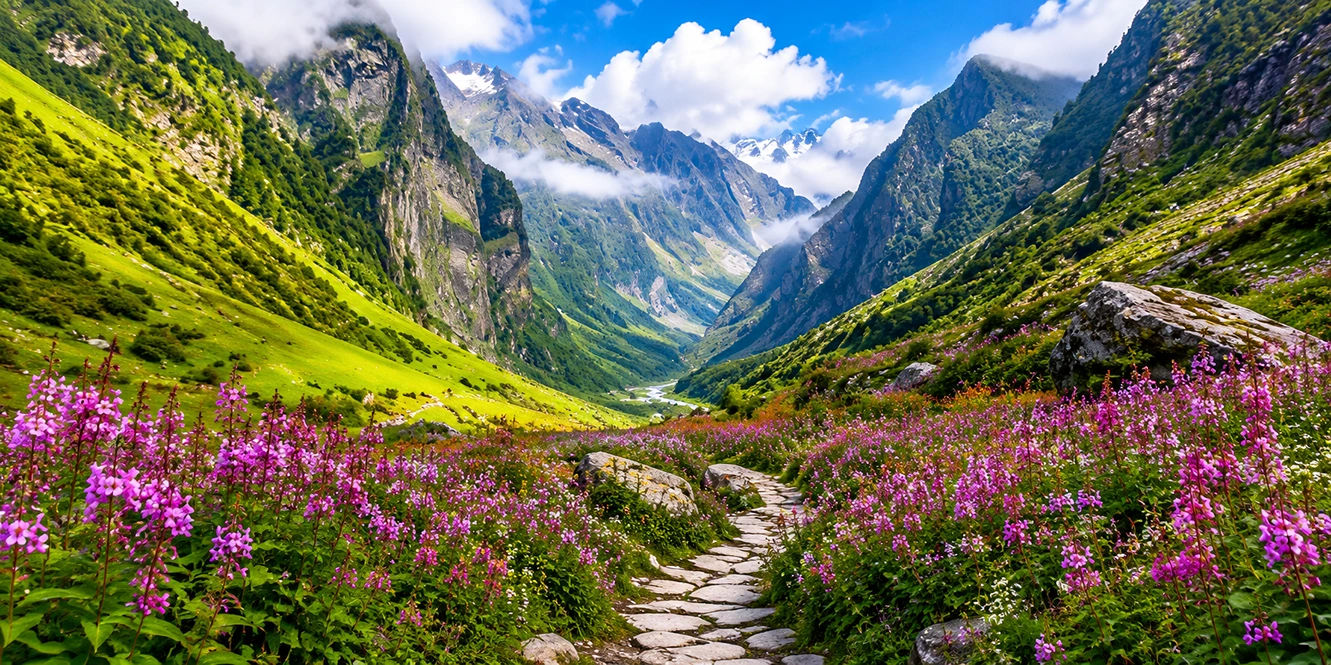
rek Distance: 3.7 km (Each Way) | Duration: 6 Hours Altitude Gain: 10,520 ft to 11,550 ft Today, explore the breathtaking Valley of Flowers National Park, a UNESCO World Heritage Site renowned for its vibrant alpine blooms. Walk through flower-filled meadows surrounded by waterfalls, streams, and majestic Himalayan peaks.
Day 4: Day 4: Ghangaria to Hemkund Sahib and Back
Trek Distance: 6 km (Each Way) | Duration: 8–9 Hours Altitude Gain: 10,520 ft to 14,107 ft A series of steep switchbacks leads to Hemkund Sahib, one of the highest Gurudwaras in the world. The serene glacial lake and stunning mountain surroundings make the challenging ascent incredibly rewarding.
Day 5: Ghangaria to Poolna Trek | Poolna to Joshimath Drive
Trek Distance: 9 km | Duration: 5–6 Hours Altitude Loss: 10,520 ft to 6,215 ft Drive Distance: 22 km | Duration: 43 Minutes Descend through scenic trails back to Poolna and then drive to Joshimath. Spend the evening relaxing and reflecting on the unforgettable experiences of the Valley of Flowers Trek.
Day 6: Joshimath to Rishikesh
Drive Distance: 272 km | Duration: 10 Hours | Altitude: 6,300 ft (1,920 m) Bid farewell to the Himalayas as you drive back to Rishikesh, carrying home incredible memories of colorful flower valleys, sacred mountain landscapes, and an unforgettable trekking adventure.
Photo Gallery of Valley of Flowers Trek
Detail Itinerary
Day 1: Getting to Base Camp – Joshimath
Drive Distance: 272 km | Duration: 8 Hours Pick-up: Haridwar Railway Station (as per your scheduled arrival) Your Valley of Flowers Trek adventure begins with a scenic drive from Haridwar to Joshimath, the trek's base camp. As the road winds through the Garhwal Himalayas, you'll follow the sacred Ganga River and witness breathtaking mountain landscapes throughout the journey. As you travel beyond Pipalkoti, the scenery gradually transforms, offering your first glimpses of the Greater Himalayan Range. From Joshimath, you'll be welcomed by views of the majestic Mt. Dronagiri, a peak that will accompany you through much of your trek. Along the route, you'll pass historic locations linked to the famous Chipko Movement, natural hot springs, and the villages of Lata and Reini, each holding a unique place in Uttarakhand's cultural and environmental history.
Day 2: Joshimath to Ghangaria via Poolna
Drive Distance: 22 km | Drive Duration: 47 Minutes Trek Distance: 9 km Altitude Gain: 7,785 ft to 10,520 ft Trek Duration: 5–6 Hours Difficulty: Easy to Moderate After breakfast, drive from Joshimath to Poolna, reducing today's trekking distance from the earlier 13 km route to a comfortable 9 km. The trail follows the river through lush forests and mountain terrain. It is well-marked and frequently used by Sikh pilgrims travelling to Hemkund Sahib. Despite the steady footfall, the route remains impressively clean thanks to the dedicated volunteers who maintain it daily. The trail alternates between sunny stretches and shaded sections, providing a pleasant trekking experience. Around the midpoint, you'll cross a bridge and continue along the opposite bank of the river. As the gradient remains gradual, the trek feels comfortable and enjoyable. After 5–6 hours of trekking, you'll reach Ghangaria, the base camp for both the Valley of Flowers and Hemkund Sahib. The village features a helipad, hotels, local eateries, and a Gurudwara that warmly welcomes visitors with free meals and accommodation.
Day 3: Ghangaria to the Valley of Flowers and Back
Trek Distance: 3.7 km (Each Way) Altitude Gain: 10,520 ft to 11,550 ft Duration: 6–7 Hours Difficulty: Easy Today is the highlight of your journey. Starting early from Ghangaria, you'll head towards the world-famous Valley of Flowers National Park. Within a short distance, flowering plants begin to line both sides of the trail, offering a glimpse of the beauty that lies ahead. As you continue, you'll cross a charming bridge over a rushing mountain stream. Towering rocky cliffs, snow patches, and panoramic Himalayan views accompany you throughout the journey. Unlike the previous day's crowded trail, the Valley of Flowers offers a more peaceful and immersive experience. As the valley opens before you, you'll witness an extraordinary landscape painted with shades of green, yellow, red, blue, and pink. Dense forests cover the lower slopes, while snow-capped peaks rise dramatically in the distance. For nature lovers and photographers, the valley feels like a dream. During July and August, you'll encounter numerous Himalayan flowers, including Blue Poppy, Himalayan Rose, Meadow Geranium, River Anemone, Snake Foil, Dog Flower, and Hooked Stick Seed. As you venture deeper into the valley, the fragrance of blooming flowers fills the air. The valley stretches approximately 5–7 km and culminates near a distant glacier, while a pristine stream flows gracefully through its centre. After spending ample time exploring this UNESCO World Heritage Site, you'll return to Ghangaria by the same trail. The changing afternoon light often reveals an entirely different perspective of the valley's beauty.
Day 4: Ghangaria to Hemkund Sahib and Back
Trek Distance: 6 km (Each Way) Altitude Gain: 10,520 ft to 14,107 ft Duration: 8–9 Hours Difficulty: Moderate to Difficult Begin your day early, around 5:00 AM, when the sounds of pilgrims preparing for their journey to Hemkund Sahib fill the mountain air. The trail gradually ascends through a series of steep switchbacks. Along the way, you'll pass waterfalls, rocky slopes, and spectacular mountain viewpoints. After crossing the tree line, the scenery becomes even more dramatic, with sweeping views of the surrounding Himalayan landscape. A melting glacier can often be seen along the route. Due to the rapid altitude gain, it is important to maintain a steady pace and take regular standing breaks to acclimatize properly. After several hours of climbing, you'll arrive at the sacred Hemkund Sahib Gurudwara, situated beside the pristine Hemkund Lake. The lake remains frozen for nearly half the year and reflects the surrounding peaks like a mirror on calm days. Seek blessings at the Gurudwara and enjoy the traditional hot tea and khichdi served to visitors. The peaceful atmosphere surrounding the lake creates one of the most memorable moments of the trek. The rare Brahma Kamal, Uttarakhand's state flower, can also be found growing in this high-altitude region. After spending time at Hemkund Sahib, begin your descent back to Ghangaria. The downhill journey takes approximately 4–5 hours and requires careful footing to reduce strain on your knees and toes.
Day 5: Ghangaria to Poolna Trek | Drive to Joshimath
Trek Distance: 9 km Altitude Loss: 10,520 ft to 6,215 ft Trek Duration: 5–6 Hours Difficulty: Easy to Moderate Drive Distance: 22 km Drive Duration: 47 Minutes Today, retrace the same scenic trail that brought you to Ghangaria. Enjoy your final walk through the beautiful forests and river valleys as you descend back to Poolna. From Poolna, drive to Joshimath and spend the evening relaxing after completing your unforgettable Valley of Flowers and Hemkund Sahib adventure.
Day 6: Joshimath to Rishikesh – End of the Journey
Drive Distance: 300 km Duration: 10 Hours Altitude: 6,300 ft (1,920 m) After breakfast, begin your return journey to Rishikesh. As the mountains gradually fade into the distance, you'll carry home unforgettable memories of blooming alpine meadows, sacred Himalayan landscapes, and one of India's most beautiful trekking experiences. Your Valley of Flowers Trek comes to an end, but the memories will stay with you forever.
Highlights of the Valley of Flowers Trek
A Valley Bursting with Colors
Step into a natural wonderland filled with over 500 species of wildflowers. During the blooming season, the valley transforms into a vibrant carpet of pink, purple, yellow, red, and white blossoms. Rare Himalayan flowers such as the Blue Poppy, Brahma Kamal, Cobra Lily, and Himalayan Rose create a breathtaking landscape that changes every few weeks.
UNESCO World Heritage Site
The Valley of Flowers National Park is recognized as a UNESCO World Heritage Site for its extraordinary natural beauty and rich biodiversity. Surrounded by towering Himalayan peaks, waterfalls, and alpine meadows, it is one of India's most treasured natural destinations.
Visit the Sacred Hemkund Sahib
Experience the spiritual beauty of Hemkund Sahib, one of the highest Gurudwaras in the world, located at an altitude of 14,107 ft. Nestled beside a pristine glacial lake and surrounded by snow-clad mountains, it offers a peaceful and unforgettable Himalayan experience.
Spectacular Himalayan Landscapes
From lush green valleys and cascading waterfalls to snow-covered peaks and crystal-clear streams, every step of the trek offers postcard-worthy views and endless photography opportunities.
Rich Himalayan Biodiversity
The valley is home to a remarkable variety of alpine plants, butterflies, birds, and wildlife. Nature enthusiasts and photographers will find something fascinating around every corner.
The Famous "L-Shaped Valley View"
One of the most memorable viewpoints on the trek reveals the Valley of Flowers winding through the mountains in its distinctive L-shape. This panoramic view showcases the valley's immense beauty and unique geography.
Perfect Himalayan Trek for Beginners
With well-defined trails, gradual ascents, and moderate difficulty, the Valley of Flowers Trek is considered one of the best Himalayan treks for beginners, families, photographers, and nature lovers.
One of India's Best Monsoon Treks
Visit during July, August, or September to witness blooming flowers, mist-covered mountains, powerful waterfalls, and some of the most beautiful landscapes found anywhere in the Indian Himalayas.
How difficult is the Valley of Flowers Trek
The Valley of Flowers Trek is considered a moderate Himalayan trek, making it one of the best treks in India for beginners and nature lovers. While it does not require any technical climbing or mountaineering skills, trekkers should have a reasonable level of fitness to comfortably complete the journey. The trek covers approximately 34 km over 6 days and reaches a maximum altitude of 14,107 ft at Hemkund Sahib. Most trekking days involve gradual ascents on well-defined mountain trails, allowing participants to enjoy the journey without facing extremely demanding terrain. The most challenging part of the trek is the climb from Ghangaria to Hemkund Sahib, where the trail gains significant altitude over a relatively short distance. However, with a steady pace, proper hydration, and regular breaks, most trekkers successfully complete this section. One of the reasons the Valley of Flowers Trek is considered beginner-friendly is its gradual acclimatization. The itinerary allows trekkers to gain altitude steadily, helping the body adjust naturally while reducing the chances of altitude-related discomfort. This trek is ideal for first-time trekkers, families, students, working professionals, photographers, nature enthusiasts, and active senior citizens. If you can comfortably walk 5–6 km, climb stairs for 20–30 minutes without excessive fatigue, and maintain basic fitness, you can prepare yourself for the trek with a few weeks of regular walking, jogging, or light exercise. Beyond the physical challenge, the trek rewards you with unforgettable experiences. Walking through flower-filled meadows, crossing mountain streams, witnessing towering Himalayan peaks, and visiting the sacred Hemkund Sahib make every step worthwhile. For those planning their first Himalayan adventure, the Valley of Flowers Trek in Uttarakhand offers the perfect balance of challenge, achievement, and breathtaking natural beauty.
Best time to do this Valley of Flowers Trek
The best time to visit the Valley of Flowers Trek is between July and September, when the valley transforms into a breathtaking paradise of blooming wildflowers, lush green meadows, cascading waterfalls, and mist-covered Himalayan landscapes. Each month offers a unique experience, making this one of the most beautiful monsoon treks in India. Valley of Flowers Trek in July July marks the beginning of the flowering season. As the monsoon arrives, the valley awakens with fresh greenery and the first blooms of the season. Streams and waterfalls flow at full force, creating dramatic scenery throughout the trek. Trekkers visiting in July can enjoy fewer crowds and witness the valley gradually coming to life. Valley of Flowers Trek in August August is widely regarded as the best month to visit the Valley of Flowers. During this period, the valley reaches its peak bloom, with hundreds of species of alpine flowers covering the meadows in vibrant shades of pink, yellow, purple, red, and blue. The landscape becomes a spectacular natural canvas, attracting trekkers, photographers, and nature enthusiasts from across the country. Valley of Flowers Trek in September September offers a different but equally rewarding experience. As the monsoon begins to recede, the skies become clearer and visibility improves significantly. While the number of flowers gradually decreases, trekkers are rewarded with stunning views of the surrounding Himalayan peaks and a more peaceful trekking experience with fewer visitors on the trail. Which is the Best Month for the Valley of Flowers Trek? If your goal is to witness the valley in its most colorful form, August is the ideal month. However, July offers fresh blooms and dramatic monsoon scenery, while September provides clearer mountain views and a quieter atmosphere. Each month showcases a different side of this UNESCO World Heritage Site. Whether you visit in July, August, or September, the Valley of Flowers Trek in Uttarakhand promises an unforgettable journey through one of India's most spectacular Himalayan landscapes, filled with vibrant flowers, rich biodiversity, and breathtaking natural beauty. Valley of Flowers in July July marks the beginning of the bloom season. The valley starts turning green after the arrival of the monsoon, and many flower species begin to bloom. Waterfalls are at their most powerful, creating dramatic landscapes throughout the trek. Valley of Flowers in August August is widely considered the best time to visit Valley of Flowers. This is when the valley reaches peak bloom, with hundreds of flower species covering the meadows in vibrant shades of pink, yellow, purple, red, and blue. Most trekkers choose August to witness the valley at its most colorful. Valley of Flowers in September September offers a different kind of beauty. While the flower density gradually reduces, the skies often become clearer, providing better views of surrounding Himalayan peaks. The trails are less crowded, making it a great option for trekkers who prefer a quieter mountain experience. Regardless of the month you choose, the Valley of Flowers Trek offers an unforgettable Himalayan journey filled with stunning landscapes, unique biodiversity, and incredible photography opportunities.
Why choose wildvoyages for Valley of Flowers Trek
At Wildvoyages, we believe trekking is about more than reaching a destination—it's about discovering new places, challenging yourself, and creating memories that stay with you for a lifetime. Our Valley of Flowers Trek is thoughtfully designed to provide a safe, comfortable, and unforgettable Himalayan experience for both first-time trekkers and seasoned adventurers. From experienced trek leaders and trained support staff to carefully planned logistics and comfortable accommodations, every aspect of your journey is managed with attention to detail. Safety Comes First Your safety is our highest priority. Our treks follow proper acclimatization schedules and are supported by trained trek leaders, first-aid kits, oxygen backup, and experienced mountain staff who understand the terrain, weather, and challenges of high-altitude trekking. Experienced Trek Leaders Our passionate and knowledgeable trek leaders ensure that every participant feels supported throughout the journey. Whether it's your first Himalayan trek or your tenth, our team is there to guide, motivate, and assist you every step of the way. Well-Planned Trek Experience We believe the journey should be as enjoyable as the destination. Our itineraries are designed to maintain a comfortable pace, allowing you to fully appreciate the stunning landscapes, vibrant flower-filled meadows, and spiritual beauty of Hemkund Sahib without feeling rushed. Seamless Travel Support Whether you're joining us from Ahmedabad, Surat, Vadodara, Rajkot, Mumbai, Pune, or anywhere else in India, our team provides clear guidance and support before and during the trek, ensuring a smooth and hassle-free experience. More Than Just a Trek For us, success isn't measured by reaching the finish point. It's measured by the smiles, confidence, friendships, and memories you take home. We want every trekker to return not only with beautiful photographs but with a deeper connection to nature and a lasting love for the mountains. Join Wildvoyages and experience the Valley of Flowers Trek with a team that is committed to making your Himalayan adventure safe, memorable, and truly extraordinary.
Includes
Accommodation
There will be lodge or homestay accommodation at the base camp, and during the trekking, there'll be shared tents arrangement, ensuring safety throughout your journey.
All Inner Line Permits
We take care of all necessary forest department permissions for your trek, ensuring a smooth and legally compliant journey through the designated areas.
Safety gear
First aid, medical kits, oxygen cylinders, stretchers, etc., will be accessible at all campsites for handling emergencies.
Meals
Enjoy hygienic and nourishing meals prepared by our local cooks, providing the energy you need to tackle each day of your trekking adventure.
Transportation
We arrange transportation from the pickup point to the base camp and any necessary transfers during the trek, ensuring convenient access to the trekking routes.
Excludes
Personal Expenses
Any personal expenses are not included in the trek package.
Additional Cost
Any additional expenses, such as natural calamities and government restriction will not be covered in trek fees.
Meals during pick-up to base
The trek fee does not cover any meals or snacks you purchased during the journey from pick-up points to the base camp.
Important Note: Items Not Mentioned:
Anything not mentioned in the inclusion list will be considered as an exclusion from the package. We advise all trekkers to carefully review the inclusion and exclusion lists before booking your trek with us.
Things to Carry
Things to Carry
- Fleece
- Flip Flops / Slippers
- Hat / Cap
- Personal expenses
- Poncho/Raincoat
- Scarf / Balaclava
- Sun glass
- Tourch
- Trekking shoes
- Waterbottle
- Woolen gloves
- Down jacket
- Full Sleeves Tshirts
- Hiking pole
- Personal toiletries & Medicines
- Rucksack
- Socks
- Thermal inners
- Trek pants
- Valid id proof
Frequently Asked Questions for Valley of Flowers Trek
How do I reach Haridwar for the Valley of Flowers Trek?
You can reach Haridwar by train from major cities across India or take a flight to Dehradun's Jolly Grant Airport. From Haridwar, our team will arrange transportation to Joshimath, the base camp for the Valley of Flowers Trek. Important: We recommend arriving in Haridwar at least one day before the trek begins. For example, if your trek starts on 22nd July, plan to reach Haridwar on 21st July to ensure a comfortable and stress-free journey.
Is the Valley of Flowers Trek suitable for beginners?
Yes, the Valley of Flowers Trek is one of the best Himalayan treks for beginners. The trails are well-defined, the daily trekking distances are manageable, and the itinerary allows gradual acclimatization. Anyone with a basic fitness level can prepare for and complete the trek successfully.
How difficult is the Valley of Flowers Trek?
The Valley of Flowers Trek is considered a moderate trek. While no technical climbing skills are required, trekkers should be comfortable walking for 5–6 hours a day. The most challenging section is the climb from Ghangaria to Hemkund Sahib due to the steep ascent and higher altitude.
How long is the Valley of Flowers Trek?
The complete Valley of Flowers Trek covers approximately 34–38 km over 6 days, including visits to both the Valley of Flowers National Park and Hemkund Sahib. Daily trekking durations generally range between 5 and 8 hours, depending on the day's route.
What is the best time to visit the Valley of Flowers?
The best time to visit the Valley of Flowers is between July and September. August is considered the peak blooming season when the valley is covered with vibrant wildflowers. July offers fresh blooms and lush greenery, while September provides clearer mountain views and fewer crowds.
What is the highest altitude reached during the trek?
The highest point of the trek is Hemkund Sahib, located at an altitude of 14,107 ft (4,300 m). The Valley of Flowers itself is situated at approximately 11,550 ft.
Is Hemkund Sahib included in the Valley of Flowers Trek?
Yes. Most Valley of Flowers itineraries include a day trek to Hemkund Sahib, one of the highest Gurudwaras in the world. The sacred lake and surrounding Himalayan peaks make it one of the trek's most memorable highlights.
Do I need prior trekking experience?
No prior trekking experience is required. The trek is suitable for beginners, provided they maintain a reasonable level of fitness and follow the guidance of trek leaders throughout the journey.
What fitness level is required for the Valley of Flowers Trek?
Trekkers should be able to comfortably walk 5–6 km and climb stairs continuously for 20–30 minutes without excessive fatigue. A few weeks of regular walking, jogging, cycling, or cardio exercise before the trek is recommended.
Is altitude sickness a concern on the Valley of Flowers Trek?
The itinerary is designed with gradual altitude gain to help trekkers acclimatize naturally. While the risk of altitude sickness is lower compared to many higher Himalayan treks, staying hydrated, maintaining a steady pace, and following trek leader instructions is important.
What should I pack for the Valley of Flowers Trek?
Essential items include trekking shoes, warm layers, a waterproof jacket, backpack, trekking pants, gloves, sunscreen, sunglasses, personal medications, and a reusable water bottle. A detailed packing list is usually shared before departure.
Loading planning guides...
Loading related treks...