
Get in Touch with Our Trek Expert
Trek Fee
EX.Dehradun to Dehradun
Loading rental items...
Select Number of Seats
SELECT DATE TO REGISTER - 2026
About Kedarkantha Trek
Summit Dreams: Explore the Trills of Kedarkantha Trek
Quick Itinerary
Day 1: Dehradun → Sankri (6,400 ft)
Drive: -200 km/8-9 hrs Scenic journey via Mussoorie, Purola & Mori along the Tons River Stay in a guesthouse/homestay at Sankri
Day 2: Sankri→ Juda Ka Talab (9,100 ft)
Trek: 4 km/4-5 hrs Trail through pine forests & snow patches Campsite near the frozen lake
Day 3: Juda Ka Talab→ Kedarkantha Base Camp (11,200 ft)
Trek: 4 km/3-4 hrs - Panoramic views of Swargarohini, Bandarpoonch, and Kalanag peaks Camping under the stars
Day 4: Base Camp → Kedarkantha Summit (12,500 ft) → Sakri (6,500 ft)
Trek: 6 km/7-8 hrs (early morning summit push) Witness sunrise from the summit with 360° Himalayan views Descend to the Sankri campsite.
Day 5: Sankri → Dehradun
Drive back to Dehradun by evening (~7-8 hrs)
Photo Gallery of Kedarkantha Trek
Detail Itinerary
Day 1: Setting Foot in the Gateway - Dehradun to Sankri Arrival
• Your journey from Dehradun to Sankri begins early in the morning. The day starts with a 185 km drive to Sankri, where the urban scenery of Dehradun slowly gives way to the lush embrace of the Himalayas. • Your path takes you through a beautiful valley filled with wildflowers, especially in the spring. During this season, the valley comes to life with colourful rhododendrons and wild lilies, creating a vibrant landscape. • You reach the Wild Voyages Basecamp at Sankri village in the evening. Sankri sits at an elevation of 1,920 metres or approximately 6,400 feet above sea level. Here, you'll be warmly welcomed for an exciting journey in the heart of the Himalayas. • Upon arriving at Sankri Village, the sky is painted with golden hues, marking the start of your Himalayan exploration. • After enjoying a tasty dinner made from local ingredients, you gather around a bonfire to share stories and laughter with fellow trekkers. As night falls and the mountains bring a sense of peace, rest for the night, dreaming about the adventures that lie ahead.
Day 2: Trekking Bliss - Sankri to Juda Ka Taal Camp Exploration
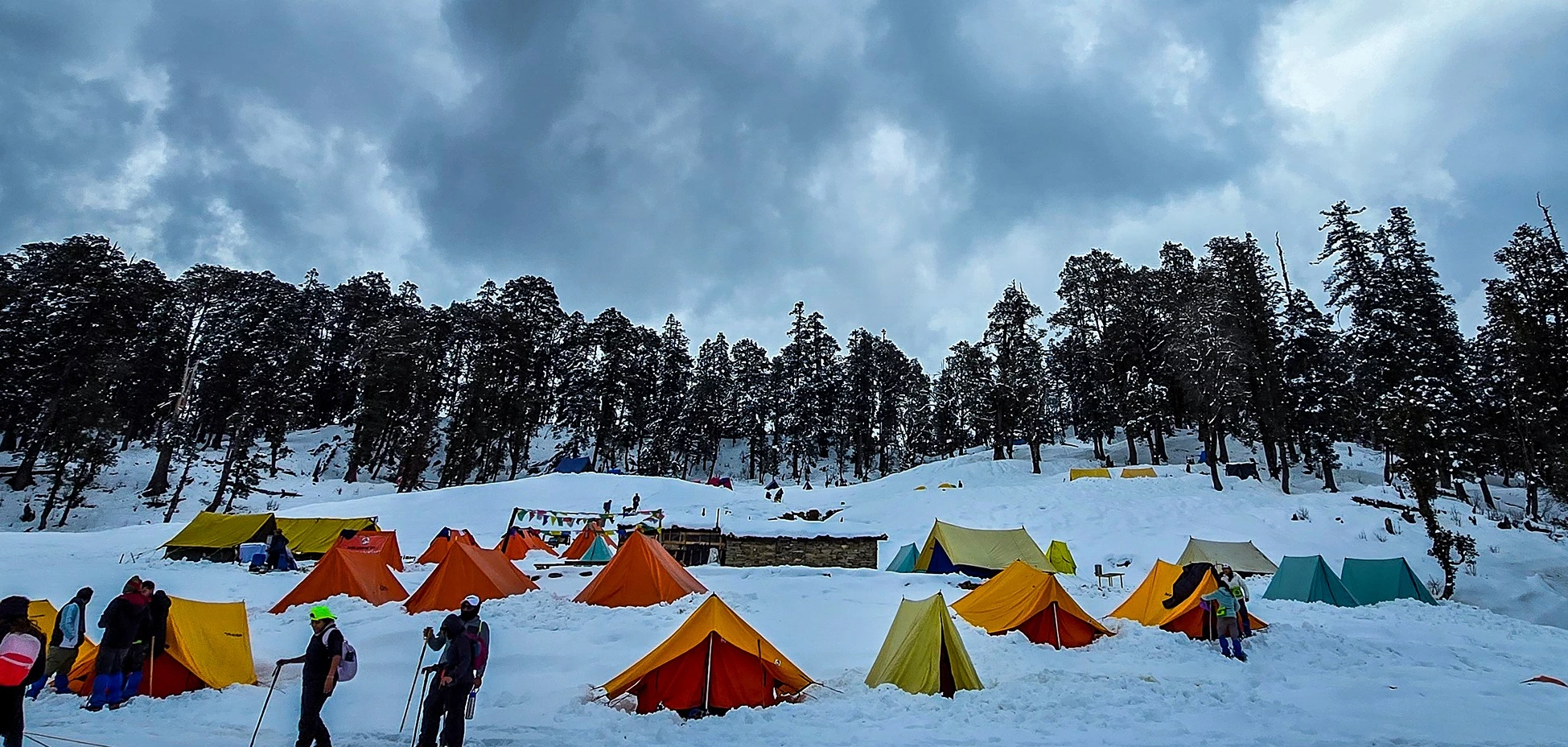
• Commencing the day early and enjoying a tasty breakfast at the Sankri Village base camp, you'll start your journey to Juda Ka Taal. This high-altitude lake comes across the Kedarkantha trek in the Uttarkashi district of Uttarakhand. This mesmerising lake, situated at an altitude of 2,700 metres above sea level, has captivating views of the Himalayan landscapes. • The trek starts with a 4 km, approximately 3-hour hike to the Juda Ka Taal campsite, a serene location surrounded by the splendour of nature. • The trail commences through a beautiful pine and maple forest, climbing alongside wildlife and pastures. As you progress, you'll come across charming huts nestled among the fields. • While walking, you may encounter some icy and slushy terrain, but the Wild Voyages guides are there to assist you, so there's no need to worry. • During the trek, you'll glimpse a massive lake on the left and thick pine and oak forests on the other side, creating a stunning display of beauty. The water near the lake will be lukewarm, while the remaining water will be colder. • In winter, the lake transforms into a sheet of ice, offering a captivating view. Moreover, The lake features a significant natural tunnel that provides water to the nearby villagers. • Your journey involves crossing bridges, and one exciting encounter is the possibility of meeting Himalayan Langur. Keep in mind that these are shy creatures, and spotting them is a rare opportunity. • In this region, you might also come across boars, hares, and martens. Juda Ka Taal is a picturesque destination within the dense pine and oak forest. • In the evening, indulge in a delightful dinner at your campsite. After the meal, take the opportunity to unwind or explore the surroundings with a leisurely walk around the campsite.
Day 3: Uphill Adventure- Juda Ka Taal to Kedarkantha Base Camp Trek
• After waking up early and witnessing the majestic sunrise, we will commence the trek to the KedarKantha base, situated at an elevation of 11,250 feet. • The distance from Juda Ka Taal to Kedarkantha base is approximately 3 kilometres, and it takes about 2.5 hours to cover at a moderate pace. • As you climb further, the trail will become steeper. Pay close attention, as your trek guide will provide essential guidance for navigating snow slopes. Moreover, He will guide you to take the appropriate size for your footsteps. • You'll trek through the dense forest of pine and oak trees, navigating steep ridges. As you progress towards a height of 10,400 feet, you'll encounter snow traces, offering magnificent views of nature. • Prepare yourself, as more spectacular views await. Before reaching the base camp, all trekkers can enjoy stunning vistas of different arc-shaped ranges covered in snow, including Bandarpoonch, Swargarohini, Kala Nag, and Ranglana, proudly standing in the lap of Mother Nature. • In the evening, a delicious dinner will be served at your campsite.
Day 4: Summit Triumph - Kedarkantha Summit & Back
• After having a full-filling breakfast, we'll start the trekking journey from an elevation of 11,250 feet to 12,500 feet, covering a distance of nearly 8 kilometres in approximately 7 hours. It's essential to note that the trail will become steeper, so ensure you are adequately prepared. • While trekking, you'll witness the enchanting colours of nature and the majestic sights of various ranges, including Rupin. According to local rumours, the peak was initially intended for the construction of the Kedarnath temple. However, villagers reported hearing animal sounds, which were considered an omen of a divine event. • However, they constructed a statue of Lord Shiva up to the neck. In Hindi, the neck is called "Kanth," and since Lord Shiva has many names, including Kedar, the peak came to be known as Kedarkantha. • At the Kedarkantha peak, indulge your eyes with captivating views of Bandarpoonch, Swargarohini, Kalanaag, Gangotri, and Yamunotri. Upon reaching the summit, the mesmerising views of nature will undoubtedly evoke a sense of accomplishment. • At the summit, you'll also find a small temple dedicated to Lord Shiva and Goddess Parvati, along with a small shrine of Lord Ganesh. Additionally, the descent to the campsite will commence on the same day. • Have a comforting dinner at your campsite in the evening, and afterwards, you can either relax or enjoy stargazing.
Day 5: Back To Base - The Final Trek To Sankri's Campsite - Drive to Dehradun
• As the sun goes down, casting a warm light on the big mountains, it's time to bid farewell to them. • You'll walk 7 kilometres back to Sankri, going over the same paths you took before. Remembering all the fascinating things you saw and did during the trip, each step back to Sankri is like cherishing the beautiful memories of the mountains. • The trail reminds you of the fresh mountain air, the sounds of leaves, and the friends you made on this incredible trek. Even though leaving the mountains might feel a little sad, knowing you conquered them and have more adventures ahead makes this walk back to Sankri a mix of happy and kind of sad, but definitely a memorable ending to your fantastic journey. On the same day, we'll drive you back to Dehradun, holding on to the great memories from the Kedarkantha trek.
Highlights of the Kedarkantha Trek
Snow Trekking Experience
The Kedarkantha Trek is widely regarded as one of the best winter treks in India. From December to April, the trail is blanketed in shimmering snow, turning the forests and meadows into a pristine white wonderland. Every step through the powdery snow leads to postcard-perfect views, making it an unmissable experience for those who dream of walking in the Himalayas during winter.
360° Summit Views
At an altitude of 12,500 ft, the Kedarkantha summit offers stunning 360° Himalayan panoramas. On a clear day, you can witness the magnificent Swargarohini, Bandarpoonch, Black Peak (Kalanag), and the distant Yamunotri and Gangotri ranges. The unobstructed views of endless snow-clad peaks are the crown jewel of the trek, rewarding trekkers with a sense of true Himalayan grandeur.
Juda Ka Talab – The Frozen Lake
Midway to the summit lies Juda Ka Talab, a mesmerizing high-altitude glacial lake surrounded by dense pine and oak forests. In winter, the lake freezes completely, reflecting the surrounding trees in its glassy surface. It’s one of the most photogenic spots on the trail and a serene camping site that perfectly captures the tranquility of the mountains.
Charming Himalayan Villages
The trek begins from Sankri, a quaint village tucked in Uttarkashi district, famous for its wooden houses, traditional Garhwali architecture, and warm-hearted locals. Walking through these villages gives trekkers a glimpse into the simple and sustainable lifestyle of the Himalayan people, rich in culture and hospitality.
Forests & Snow Meadows
The trail winds through dense pine, oak, and maple forests, where the sunlight filters through the canopy, casting a magical glow. As you climb higher, the trees open into wide alpine meadows (bugyals) draped in snow during winter. The blend of deep forests and open snowfields keeps the scenery ever-changing and breathtaking.
Easy-Moderate Difficulty – Perfect for Beginners
The Kedarkantha trek is rated easy to moderate, making it ideal for first-time trekkers, families, and adventure enthusiasts. With well-marked trails, gradual ascents, and short daily distances, it offers a comfortable introduction to high-altitude trekking while still delivering an authentic Himalayan experience.
Starry Nights & Scenic Campsites
One of the most unforgettable parts of the Kedarkantha trek is the night sky. Away from city lights, the campsites offer crystal-clear views of the Milky Way, constellations, and snow-covered peaks glistening under moonlight. Each campsite — from Juda Ka Talab to Kedarkantha Base — provides a magical setting for bonfires, storytelling, and stargazing.
The Magical Summit Sunrise
Reaching the summit before dawn is the defining moment of the trek. As the first rays of sunlight hit the snow-capped peaks, the Himalayas light up in gold, pink, and crimson hues. The sunrise from Kedarkantha is often described as one of the most beautiful in India, a view that makes every step of the climb worthwhile.
Easy Accessibility from Dehradun
The trek starts from Sankri Village, about 200 km from Dehradun, and is easily accessible via a scenic drive through Mussoorie, Purola, and Mori. Its convenient location makes Kedarkantha one of the most popular winter weekend treks for adventurers from Delhi, Dehradun, and nearby cities.
How difficult is the Kedarkantha Trek
The Kedarkantha Trek is widely considered an easy to moderate-level trek, making it one of the most popular Himalayan treks for beginners, families, and first-time trekkers. Despite its snow-clad peaks and high-altitude summit, the trek is designed to be accessible without prior technical climbing experience. Trek Overview • Summit Altitude: 12,500 ft (3,810 m) • Trek Distance (Round Trip): ~20 km • Duration: 4–6 days • Average Daily Trekking Time: 4–6 hours Why It’s Beginner-Friendly Well-Marked Trails: The trail from Sankri Village to the summit is clearly defined, with no risk of getting lost when accompanied by a guide. Gentle Ascents: The climb is gradual, allowing your body to acclimatize naturally to the altitude. There are no steep or technical sections that require ropes or climbing equipment. Short Daily Distances: Each day involves manageable distances, making it suitable even for people with average fitness. Professional Support: Trekking operators provide experienced guides, porters, and well-equipped camps, ensuring safety and comfort throughout the journey. Physical Requirements • While Kedarkantha is beginner-friendly, a basic fitness level is recommended: • Ability to walk 3–5 km per day on uneven terrain. • Comfortable with 3–5 hours of trekking at moderate pace. • Willingness to trek in cold weather and snow conditions during winter. Seasonal Considerations • Winter (Dec–Mar): Snow adds a layer of challenge, making proper footwear, • trekking poles, and layered clothing essential. • Spring/Autumn: Trails are dry and easy to navigate, making these seasons ideal for first-time trekkers. • Monsoon (July–Aug): Slippery trails and rainfall can increase difficulty, so monsoon trekking is generally not recommended. Acclimatization and Health Tips • Kedarkantha’s gradual ascent usually reduces the risk of altitude sickness, but staying hydrated and pacing yourself is essential. • Trekkers are encouraged to take short breaks, enjoy the scenery, and allow their bodies to adapt naturally.
Best time to do this Kedarkantha Trek
The Kedarkantha Trek is a versatile Himalayan trek that can be enjoyed in multiple seasons, each offering a distinct experience. Understanding the seasonal variations can help you plan the trek for optimal views, weather, and adventure. Winter (December – March) – The Snow Paradise • Highlights: Thick snow blankets the entire trail, turning forests, meadows, and the summit into a winter wonderland. • Conditions: Trails are snow-covered, ideal for snow trekking and photography. Summit views are breathtaking under crisp, clear skies. • Pros: Perfect for first-time snow trekkers; starry nights, frozen lakes, and magical winter landscapes. • Tips: Layered clothing, insulated jackets, gloves, and snow-proof trekking shoes are essential. Trekking poles help with balance on snow. • Ideal Months for Trekking Winter Snow Trek: December – March
Why choose wildvoyages for Kedarkantha Trek
At Wildvoyages, we believe trekking is more than just reaching a destination — it’s about immersing yourself in nature, building resilience, and creating unforgettable memories. Our thoughtfully curated Himalayan treks combine adventure, comfort, and authenticity, ensuring every journey leaves you enriched and inspired. Here’s what makes us stand out: 1. Expert Guides & Well-Organised Logistics Your safety and experience are our top priorities. Our treks are led by experienced, certified guides who know every trail, viewpoint, and weather pattern inside out. From permits and transport to accommodation and meals, we handle every detail so you can focus solely on the joy of trekking. 2. Authentic Local Experiences We believe the mountains are best experienced through their people and culture. Our itineraries include homestays, local meals, and cultural interactions, allowing you to connect deeply with the communities that call these regions home. It’s not just a trek — it’s a cultural journey. 3. Safety-First Approach Safety is the foundation of every Wildvoyages adventure. We conduct comprehensive pre-trek briefings, carry first-aid kits and oxygen support, and maintain backup evacuation plans for emergencies. Our team is trained in wilderness first aid, ensuring you trek with complete peace of mind. 4. Sustainable & Responsible Trekking We’re passionate about preserving the pristine beauty of the Himalayas. Our eco-friendly trekking practices include minimising waste, using biodegradable materials, and supporting local communities. When you trek with Wildvoyages, you contribute to responsible tourism that protects both nature and culture. 5. Flexible Group Sizes We understand that every trekker has unique preferences. That’s why we keep our group sizes small and flexible, ensuring personalised attention, better group dynamics, and an experience tailored to your pace and comfort level — whether you’re a solo traveller or part of a group. 6. Affordable Pricing, Uncompromised Experience We believe great adventures shouldn’t come at an unreasonable cost. Wildvoyages offers transparent, affordable pricing without cutting corners on quality, safety, or comfort. Every package is designed to give you the best value for your investment. Your Journey, Our Commitment At Wildvoyages, we’re more than just a trekking company — we’re your partners in exploration. Whether you’re conquering your first Himalayan trail or adding another summit to your list, our goal is to help you connect with nature, push your limits, and return with stories that last a lifetime. Join Wildvoyages — where every trek becomes a memory worth reliving.
Includes
Accommodation
There will be lodge or homestay accommodation at the base camp, and during the trekking, there'll be shared tents arrangement, ensuring safety throughout your journey.
All Inner Line Permits
We take care of all necessary forest department permissions for your trek, ensuring a smooth and legally compliant journey through the designated areas.
Safety gear
First aid, medical kits, oxygen cylinders, stretchers, etc., will be accessible at all campsites for handling emergencies.
Meals
Enjoy hygienic and nourishing meals prepared by our local cooks, providing the energy you need to tackle each day of your trekking adventure.
Transportation
We arrange transportation from the pickup point to the base camp and any necessary transfers during the trek, ensuring convenient access to the trekking routes.
Excludes
Personal Expenses
Any personal expenses are not included in the trek package.
Additional Cost
Any additional expenses, such as natural calamities and government restriction will not be covered in trek fees.
Meals during pick-up to base
The trek fee does not cover any meals or snacks you purchased during the journey from pick-up points to the base camp.
Items Not Mentioned
Anything not mentioned in the inclusion list will be considered as an exclusion from the package. We advise all trekkers to carefully review the inclusion and exclusion lists before booking your trek with us. 1. Flight Fares to and back from Surat. Any meals/ mineral water during the train & bus travel. 2. Any drinks (hard/soft) during your stay at any of the place of your choice. Any kind of insurance/personal expenses, etc. 3. Any other cost involved due to any kind of natural calamity, forced circumstances, which are out of our control. Anything not mentioned in the package includes.
Things to Carry
Things to Carry
- Down jacket
- Fleece
- Flip Flops / Slippers
- Full Sleeves Tshirts
- Hat / Cap
- Hiking pole
- Personal toiletries & Medicines
- Poncho/Raincoat
- Rucksack
- Scarf / Balaclava
- Socks
- Sun glass
- Thermal inners
- Tourch
- Trek pants
- Trekking shoes
- Valid id proof
- Waterbottle
- Woolen cap
- Woolen gloves
Frequently Asked Questions for Kedarkantha Trek
What is the Kedarkantha Trek famous for?
The Kedarkantha Trek is one of the most popular winter treks in India, known for its snow-covered trails, stunning 360° Himalayan summit views, and beginner-friendly routes. The trek also features charming villages, dense pine forests, and breathtaking sunrise views from the summit.
How difficult is the Kedarkantha Trek?
The Kedarkantha Trek is rated easy to moderate, making it ideal for first-time trekkers and families. The ascent is gradual, with well-marked trails, though walking on snow in winter requires basic stamina and balance. With proper guidance and gear, it’s easily manageable for most people.
What is the total distance and duration of the trek?
The trek covers approximately 20 km (round trip) and usually takes 4–6 days, depending on the itinerary. Daily trekking hours range from 4 to 6 hours, making it a comfortable and enjoyable Himalayan experience.
What is the best time to do the Kedarkantha Trek?
Winter (December – April): The best season for snow trekking — the trail, forests, and campsites are blanketed in snow, creating a true winter wonderland. Spring (April – May): Melting snow reveals lush meadows and blooming rhododendrons. Autumn (September – November): Offers clear skies, mild weather, and vibrant post-monsoon landscapes. (Monsoon months from July–August are not recommended due to slippery trails.)
What is the maximum altitude of the trek?
The Kedarkantha Summit stands tall at 12,500 ft (3,810 m). From the top, you can see a panoramic 360° view of major Himalayan peaks such as Swargarohini, Bandarpoonch, Black Peak (Kalanag), and the Yamunotri & Gangotri ranges.
Is prior trekking experience required?
No, Kedarkantha is a perfect trek for beginners. Anyone with basic fitness and enthusiasm for the outdoors can successfully complete the trek. However, light preparation like walking or jogging 3–4 km daily for a few weeks before the trek is recommended.
How cold does it get during the winter trek?
During winter, temperatures can range from -5°C to -10°C at night and 5°C to 10°C during the day. Warm, layered clothing and good-quality trekking gear are essential for comfort and safety.
What type of accommodation is provided?
Accommodation includes tented camps during the trek and guesthouses or homestays in Sankri village (the base camp). Camps are equipped with sleeping bags, mats, and proper insulation to keep trekkers warm even in freezing temperatures.
What should I pack for the Kedarkantha Winter Trek?
Essential gear includes: Insulated, waterproof trekking shoes Warm layered clothing (thermal wear, fleece, and down jacket) Gloves, woolen cap, and muffler Sunglasses and sunscreen (for snow glare) Trekking poles (optional but helpful) Personal medicines and reusable water bottles (Tip: Avoid carrying heavy backpacks—keep your gear light and weather-appropriate.)
How do I reach the base camp for the Kedarkantha Trek?
The trek starts from Sankri Village in Uttarkashi district, Uttarakhand. Nearest Airport: Jolly Grant Airport, Dehradun (200 km from Sankri) Nearest Railway Station: Dehradun Drive: Around 8–9 hours from Dehradun to Sankri via Mussoorie, Purola, and Mori — a scenic mountain journey.
Is the Kedarkantha Trek safe?
Yes, the trek is completely safe when done with certified guides and organized groups. The route is well-marked, and support staff are trained to handle emergencies and ensure your safety throughout the trek.
What makes Kedarkantha the best winter trek in India?
Consistent snowfall from December to April 360° Himalayan summit views from 12,500 ft Frozen Juda Ka Talab, a stunning high-altitude lake Dense pine and oak forests with snow-covered trails Beginner-friendly route with high rewards Magical sunrises and starlit night skies at campsites
Can solo trekkers join a group?
Yes! Many trekking operators offer group departures for solo trekkers. It’s a great way to meet fellow travelers, share costs, and enjoy a safe, guided experience.
Are toilets available during the trek?
Yes, each campsite provides toilet tents (dry pit or portable). While not as comfortable as home toilets, they are clean, eco-friendly, and well-maintained for the duration of the trek.
What level of fitness is required?
If you can walk 5–6 km a day and handle mild uphill climbs, you’re fit enough for Kedarkantha. Building stamina through cardio exercises, yoga, or brisk walks before the trek helps ensure a smooth experience.
Loading planning guides...
Loading related treks...